Children outside of a school in India at the border with Bangladesh.
Tuberculosis
TB is caused by bacteria (Mycobacterium tuberculosis) and it most often affects the lungs. TB is spread through the air when people with lung TB cough, sneeze or spit. A person needs to inhale only a few germs to become infected.
Every year, 10 million people fall ill with tuberculosis (TB). Despite being a preventable and curable disease, 1.5 million people die from TB each year – making it the world’s top infectious killer.
TB is the leading cause of death of people with HIV and also a major contributor to antimicrobial resistance.
Most of the people who fall ill with TB live in low- and middle-income countries, but TB is present all over the world. About half of all people with TB can be found in 8 countries: Bangladesh, China, India, Indonesia, Nigeria, Pakistan, Philippines and South Africa.
About a quarter of the global population is estimated to have been infected with TB bacteria, but most people will not go on to develop TB disease and some will clear the infection. Those who are infected but not (yet) ill with the disease cannot transmit it.
People infected with TB bacteria have a 5–10% lifetime risk of falling ill with TB. Those with compromised immune systems, such as people living with HIV, malnutrition or diabetes, or people who use tobacco, have a higher risk of falling ill.
Common symptoms of TB disease include:
• Prolonged cough
• Chest pain
• Weakness or fatigue
• Weight loss
• Fever
• Night sweats
Often, these symptoms will be mild for many months, thus leading to delays in seeking care and increasing the risk of spreading the infection to others.
If the healthcare provider suspects a patient to have TB disease, they will send the patient for testing. In the case of suspected lung TB disease, patients will be asked to give a sputum sample for testing for TB bacteria. For non-lung TB disease, samples of affected body fluids and tissue can be tested. WHO recommends rapid molecular diagnostic tests as initial tests for people showing signs and symptoms of TB. Other diagnostic tools can include sputum smear microscopy and chest X-rays.
With TB infection, a person gets infected with TB bacteria that lie inactive in the body. This infection can develop into TB disease if their immune system weakens. People with TB infection do not show any signs or symptoms of TB. To identify TB infection, healthcare providers will screen at-risk patients to rule out active TB, and they may use a skin or blood test to check for TB infection.
TB disease is curable. It is treated by standard 6 month course of 4 antibiotics. Common drugs include rifampicin and isoniazid. In some cases the TB bacteria does not respond to the standard drugs. In this case, the patient has drug-resistant TB. Treatment for drug-resistant TB is longer and more complex.
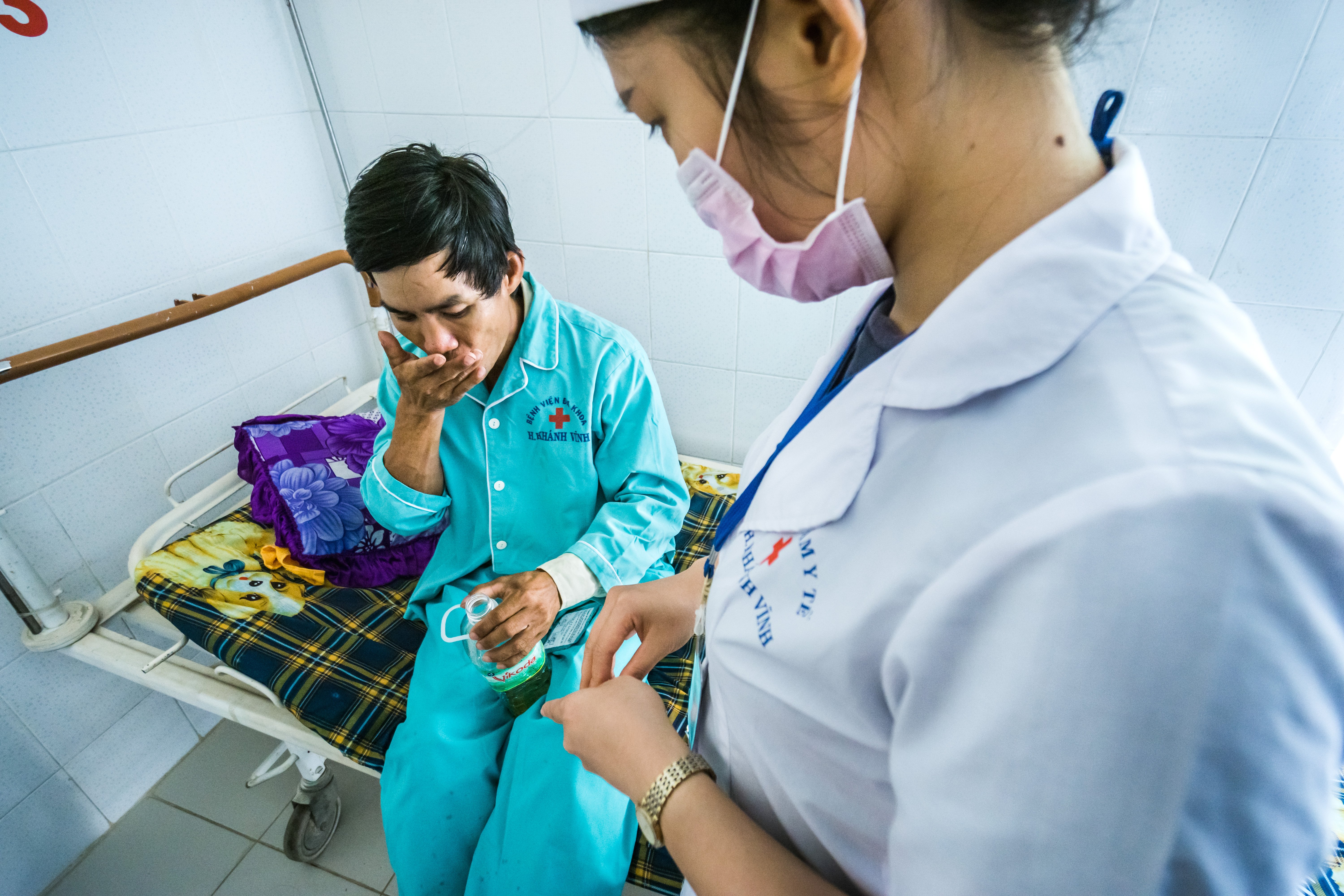
The course of TB drugs is provided to the patient with information, supervision and support by a health worker or trained volunteer. Without such support, treatment adherence can be difficult. If the treatment is not properly completed, the disease can become drug-resistant and can spread.
In the case of TB infection (where the patient is infected with TB bacteria but not ill), TB preventive treatment can be given to stop the onset of disease. This treatment uses the same drugs for a shorter time. Recent treatment options have shortened the duration to treatment to only 1 or 3 months, as compared to 6 months in the past.