
Hand hygiene
Hand hygiene is a fundamental public health measure. It is essential for infection prevention and control in health care, and also in non-health care settings – collectively referred to as “community settings” – such as households, public spaces and institutional settings. Alongside water and sanitation services, hand hygiene protects community health, by reducing infectious disease transmission and contributing to community resilience
WHO monitors hand hygiene across the results chain, generating data to track progress on hand hygiene. Burden of disease estimates highlight the impact of poor hygiene on population health and wellbeing (BOD); data on access to hand hygiene facilities enables targeted programming (Joint Monitoring Programme); data on national enabling environments and the capacity of countries and external support agencies to deliver hand hygiene enables bottlenecks to be identified and informs action (GLAAS).
WHO also develops evidence-based guidance and implementation tools to inform action by governments and their partners, enabling the sustained practice of hand hygiene. WHO/UNICEF Guidelines on hand hygiene in community settings support countries to strengthen policies, systems and programmes for hand hygiene, working with governments, partners and communities to accelerate progress and achieve hand hygiene for all.Highlight

Featured

Guidelines on hand hygiene in community settings
WHO and UNICEF’s global guidelines provide evidence-based recommendations to improve hand hygiene in households, public spaces and institutions.

Monitoring and evidence for hand hygiene
WHO monitors hand hygiene across the results chain: health impacts through estimates of the WASH-related burden of disease; access to hand hygiene services through the WHO/UNICEF Joint Monitoring Programme; and national enabling environments, systems and financing through the UN-Water Global Analysis and Assessment of Sanitation and Drinking-Water.

Supporting country action on hand hygiene
WHO works with UNICEF and partners to support national policies, plans, financing and implementation for sustainable hand hygiene, including through Hand Hygiene for All and the Hand Hygiene Acceleration Framework Tool.

Hand hygiene in health care
WHO supports hand hygiene in health-care facilities through infection prevention and control guidance and implementation approaches, and through work to improve and monitor WASH services and infrastructure in health care facilities.
News
Publications and documents
Guidelines on hand hygiene in community settings
These Guidelines are concerned with the practice of hand hygiene to protect community health outcomes, in particular, the reduction of diarrhoeal...
State of the world's hand hygiene: A global call to action to make hand hygiene a priority in policy...
This report is the first of its kind. It brings together various data sets to present the current status of hand hygiene, highlight lagging progress, and...
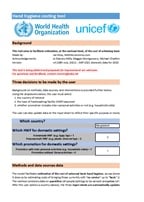
Costing tool for estimating the cost of interventions to improve hand hygiene in domestic settings
A critical building block to achieving the global goal of universal hand hygiene by 2030 is adequate levels of funding. Understanding the costs of implementing...

Global guidelines on hand hygiene in community settings: why they matter, what’s different and how governments can act on them summarizes the key...
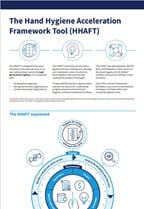
Hand Hygiene Acceleration Framework Tool (HHAFT)
The HHAFT tracks the process that a government has undergone to develop and implement a plan of action for hand hygiene improvement and assesses the quality...
