

The Institute of Philanthropy and the World Health Organization (WHO) Regional Office for the Western Pacific are deepening their partnership on healthy ageing. At its centre is a new four-year healthy ageing initiative involving WHO and The Chinese University of Hong Kong (CUHK) to advance approaches that enable older people to maintain functional ability and live well in their communities. Supported by the Institute and The Hong Kong Jockey Club Charities Trust through a contribution of approximately US$ 7 million, the initiative forms part of a wider programme of work tied to the UN Decade of Healthy Ageing (2021–2030).
The initiative comprises two complementary components.
In Hong Kong SAR (China), CUHK, working with WHO and supported by the Charities Trust, will develop and test a Multi-component Healthy Ageing Package. Building on this experience, a regional component supported by the Institute will develop adaptable guidance and tools, work with interested Member States on country adaptation and demonstration and strengthen regional learning and evidence generation.
Starting in 2027, the collaboration will generate evidence, develop regional guidance on healthy ageing, support countries to adapt it to their own contexts, and strengthen regional learning.
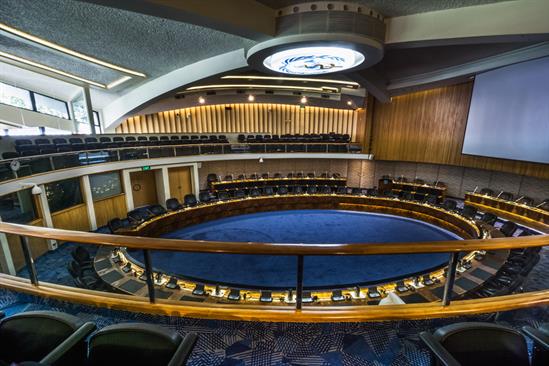
The wide-ranging collaboration was introduced at a high-level technical meeting on healthy ageing, co-convened by the Institute and WHO in Manila alongside the seventy-seventh session of the WHO Regional Committee for the Western Pacific.
The event brought together delegations from Australia, China, Cook Islands, Indonesia, Japan, Malaysia, the Philippines and Singapore, alongside representatives from the Institute, the Charities Trust, CUHK, the World Organization of Family Doctors and the International Federation of Medical Students' Associations.
Participants shared experience and practical lessons on prevention, primary health care, community-based and integrated care, the health and care workforce, and stronger links between health and social support.
Across diverse country contexts, discussions highlighted the importance of maintaining functional ability and enabling older people to live well in their communities.
“The second half of the Decade of Healthy Ageing must be about turning commitments into results,” said WHO Director-General Dr Tedros Adhanom Ghebreyesus. “This collaboration offers an opportunity to turn evidence into action, adapt solutions to country needs, and learn from what works.”
Dr Saia Ma’u Piukala, WHO Regional Director for the Western Pacific, contrasted two 75-year-olds: one whose world has shrunk to “the journey between the couch and the clinic”, the other still out walking with friends. “The gap between them isn't luck,” he said. “It’s built over decades, by the choices we make as individuals and the choices we make as societies.”
Population ageing is accelerating across the Region. More than 245 million people in the Western Pacific are aged 65 or older, and that number is projected to double by 2050. But healthy life expectancy has not kept pace: the gap between life expectancy and healthy life expectancy widened from 9.1 years in 2000 to 10.0 years in 2023.
WHO’s Regional Action Plan on Healthy Ageing in the Western Pacific provides a framework for helping older people maintain functional ability and live well in their communities. It emphasizes prevention and health promotion, primary health care, integrated health and social care, community-based support and enabling environments.
Since the endorsement of the Regional Action Plan in 2020, WHO has worked with Member States across the Region to translate these priorities into national policies, integrated care approaches and age-friendly communities, while generating and sharing practical lessons across different country contexts.
The Age-Friendly Cities and Communities initiative now has more than 170 members across nine countries and areas, including all 18 districts in Hong Kong SAR (China).
For more than three decades, The Hong Kong Jockey Club Charities Trust has supported age-friendly initiatives across Hong Kong SAR, including support for age-friendly communities. Its long-standing collaboration with CUHK has included community-based programmes that promote older people’s intrinsic capacity and functional ability and strengthen integrated health and social care.
Reflecting on the discussion, Dr Gabriel Leung, Director of the Institute of Philanthropy, highlighted many commonalities across countries despite their diverse contexts. “Partnerships and sharing are really what all of this is about,” he said. “There is so much to learn from each other.”
The new initiative will build on the experiences and lessons shared through this week’s meeting, strengthening regional learning, technical exchange and evidence generation to inform the adaptation of effective approaches across different country contexts.
###
Notes to editors
About the Institute of Philanthropy: The Institute of Philanthropy was established in September 2023 through a strategic seed grant of 6.8 billion Hong Kong dollars (US$ 870 million) from The Hong Kong Jockey Club and its Charities Trust. Established as an independent “think-fund-do” tank for China, Asia and beyond, the Institute is dedicated to promoting philanthropic thought leadership and enhancing sector capabilities at local, regional and global levels in collaboration with fellow funders. It seeks to provide an Asia-based platform bringing global stakeholders together to promote the betterment of societies everywhere.
About the work on healthy ageing at WHO in the Western Pacific: The Regional Action Plan on Healthy Ageing in the Western Pacific provides a framework for helping older people maintain functional ability and live well in their communities, with a focus on health system transformation and technological and social innovation. Progress over the past year is set out in the Report of the Regional Director: The work of WHO in the Western Pacific Region, 1 July 2025 – 30 June 2026 (WPR/RC77/2).