
/59748.tmb-300v.png?sfvrsn=9885965b_2 "For the future - publication thumbnail")
For years, Doan Quang Dung, an applied epidemiologist at the Queensland Health Department in Australia, worked within the limits of his laboratory bench: specimens, reagents, a microscope. Then COVID-19 shifted his world, and the period of forced reflection drove him “to look beyond the lab, and at populations that were most at risk of disease.” What began as curiosity during a crisis became a mission, and it led him to the World Health Organization’s Field Epidemiology Fellowship Programme (FEFP) in the Western Pacific.
“FEFP provided an eye-opening transition from the controlled lab to the ‘boots on the ground’ reality of field epidemiology, where I worked with complex datasets to uncover the causes and effects of disease,” he shared.
This year, that programme turns 20.
From mentorship to a regional engine
FEFP was established in 2006, to help countries detect and respond rapidly to emerging infections and other acute public health events. Initially individual and mentorship-based, in 2011 it became more structured. Fellows from national field epidemiology programmes joined WHO’s Health Emergency Information and Risk Assessment team at the Western Pacific Regional Office in Manila, usually for seven to ten weeks, working on surveillance, signal detection and verification and risk assessment.
Since 2006, more than 215 public health professionals from 19 countries and areas have passed through the programme, with support from the Government of Japan. Each expert returns home to apply what they have learned, strengthening national epidemiological capacity and regional preparedness. Most come from national or subnational health departments — the people on the front line when the next outbreak begins.
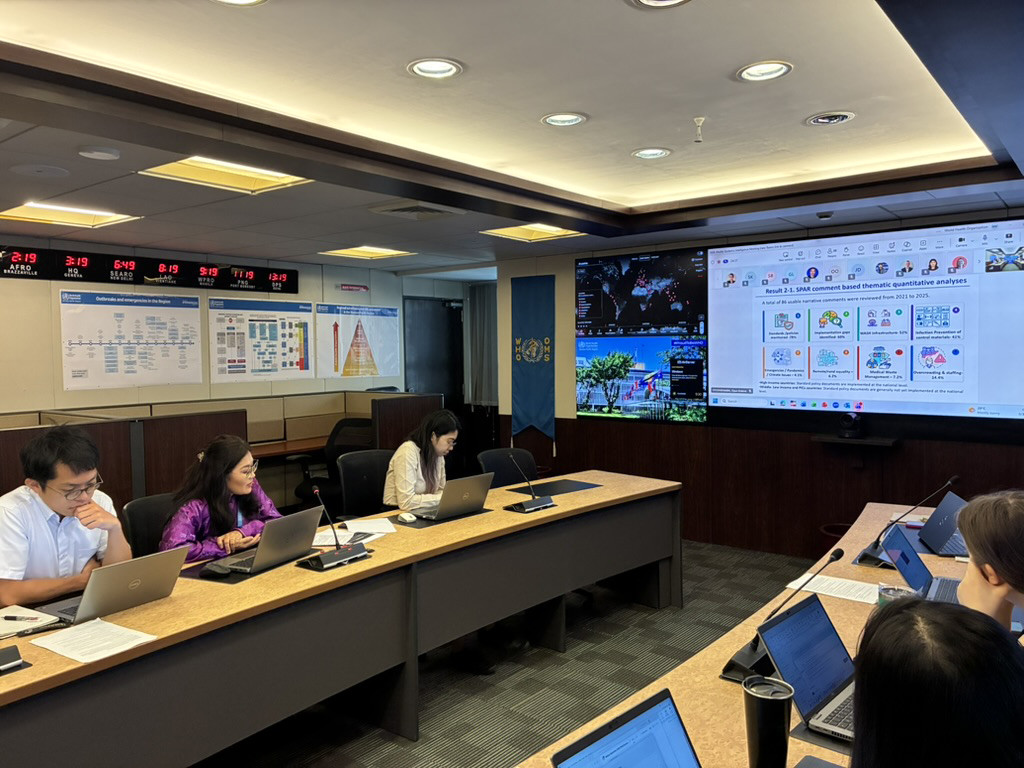 Photo caption: Fellows in WHO’s Field Epidemiology Fellowship Programme (FEFP) learn how to screen media for signals, verify them in real time, assess risks and produce daily reports. Photo credit: WHO/Satoshi Shimada
Learning by doing, for real
“The most crucial skill that I developed was the ability to translate technical findings into clear, direct communication that can guide public health action,” shared Dung as he concluded his fellowship. ‘Learning by doing’ was an approach that several fellows highlighted as beneficial.
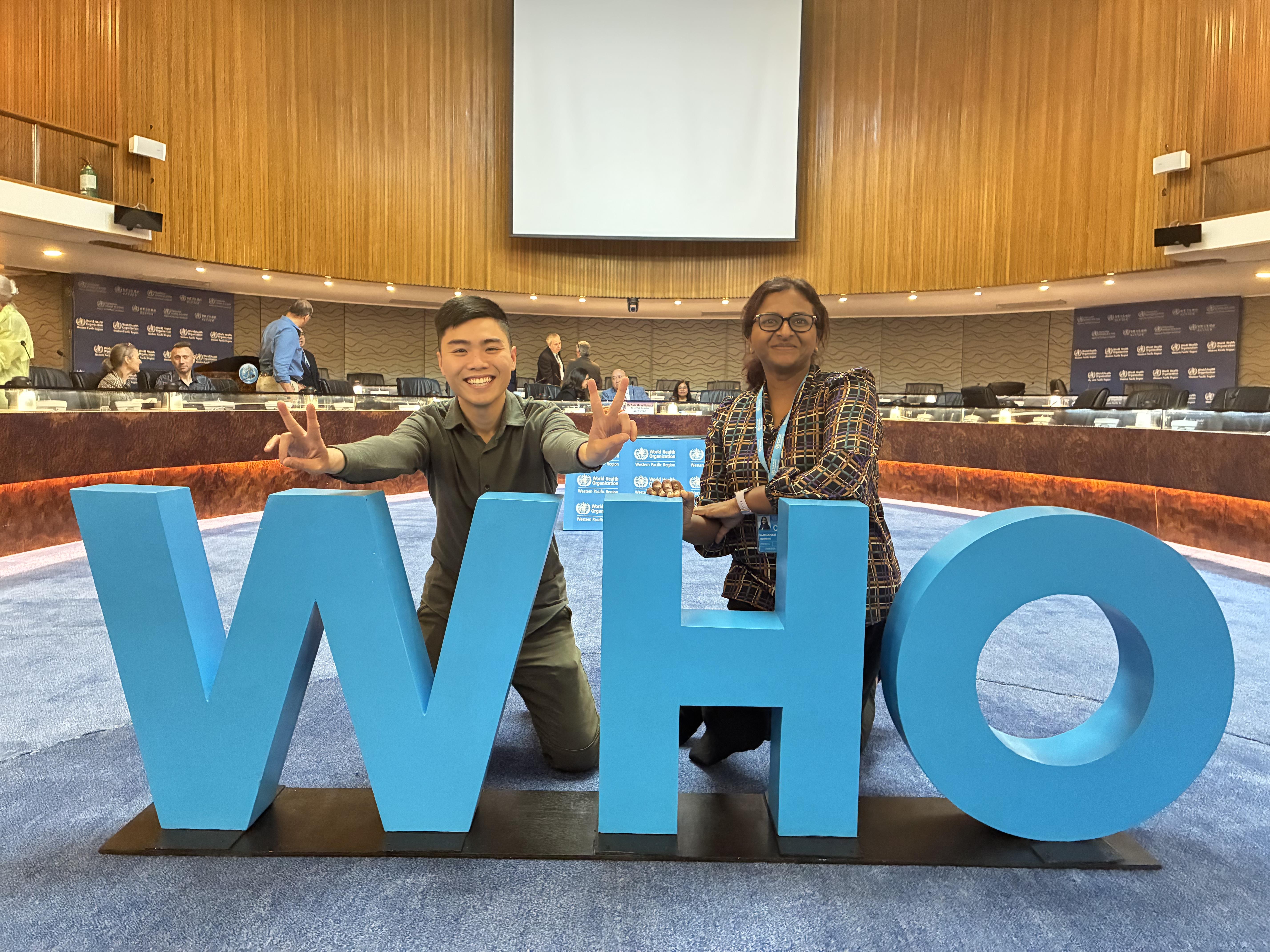 Photo caption: Doan Quang Dung, an applied epidemiologist at the Queensland Health Department in Australia, participates in WHO’s Field Epidemiology Fellowship Programme (FEFP). Photo credit: WHO
Dr Khamsamay Xaylovong of the Savannakhet Provincial Health Office in Lao People’s Democratic Republic, who participated in the programme from October to December 2025, shared the value of screening media for signals, verifying them in real time, assessing risks and helping produce daily reports. She noted: “The program was a life-changing experience. Its greatest strength is the hands-on, practical learning within a real WHO working environment, contributing meaningfully to actual surveillance activities while learning from highly experienced professionals.”
Value that travels home
The real test is what happens after fellows go home. A 2018 survey of alumni, published in the Western Pacific Surveillance and Response Journal, found that 77% of respondents felt the programme had helped them move into a better position with greater responsibility, and 94% would recommend it to colleagues.
The stories bear this out.
Judith Gafa, the first Samoan fellow, was part of the team that identified the first community case of measles in Samoa’s 2019 outbreak. After her fellowship she brought home a standard risk assessment tool, convinced that “the right kind of data can prompt the right public health actions.”
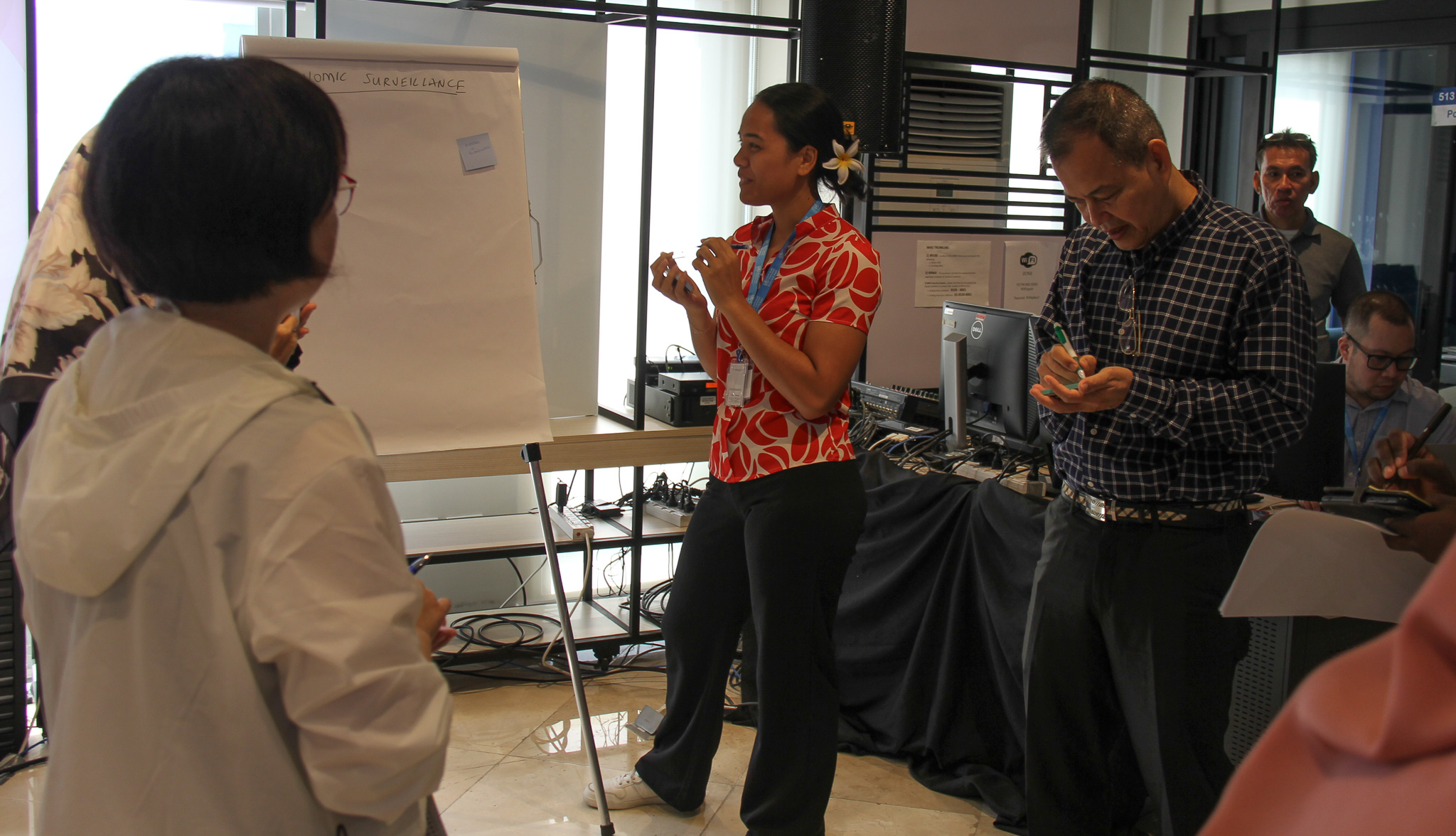 Photo caption: Judith Gafa participates in a training session through the WHO’s Field Epidemiology Fellowship Programme (FEFP). Photo credit: WHO/Don Rivada
In the Solomon Islands, Henao Boara, another alumni of the programme, uses the Epidemic Intelligence from Open Sources platform to spot disease trends before cases rise, a way, she says, to “stay ahead of the epidemiological curve.”
Then there is the network. “This program does more than teach technical skills,” Dung says. “It connects individuals who are dedicated to global health, ensuring that we never have to face a public health crisis in isolation.”
In April 2025, 22 participants from 14 countries gathered to share ideas on risk profiling, early action reviews and hospital event-based surveillance. Alumni from the programme – and future leaders in public health − form a network that contributes to the Region’s health emergency preparedness.
WHO organizes regular FEFP alumni meetings to ensure that strengths are leveraged, best practices are shared and regional solidarity in health security is advanced through a community of practice. That is the quiet infrastructure of health security: people who know one another before the next outbreak.
/teams/regional-emergencies-programme-and-division-of-health-security-and-emergencies-(dse)/health-emergency-information-risk-assessment-(him)/fefp_3rd-alumni-training-workshop.jpg?sfvrsn=bd505abe_3 "Field Epidemiology Fellowship Programme 3rd alumni training workshop") Photo caption: Alumni of WHO’s Field Epidemiology Fellowship Programme (FEFP) gather together to share common challenges and best practices. Photo credit: WHO/Don Rivada
Photo caption: Alumni of WHO’s Field Epidemiology Fellowship Programme (FEFP) gather together to share common challenges and best practices. Photo credit: WHO/Don Rivada
The next chapter: a Health Emergency Corps
Twenty years on, the model is evolving. The Regional Health Emergency Corps, part of a wider global effort to connect front-line workers, surge responders and outbreak response leaders, builds on the FEFP’s success and extends workforce development beyond applied epidemiology to leadership, surge capacity and specialist emergency response.
Among those on the new leadership path is Dr Joseph Takai, a Senior Medical Officer at Tonga’s Ministry of Health, who in 2025 became the first leader fellow in the Health Emergency Corps Fellowship Programme. The initiative let him see how Mongolia runs its newly established public health emergency operations centre (PHEOC), a useful model as Tonga works towards launching its own PHEOC before the end of 2026. “The Fellowship was an opportunity to step outside the Tonga, Pacific island, perspective, switch to a regional lens, and learn from systems that other countries in the Western Pacific Region have implemented to enhance emergency preparedness,” he noted.
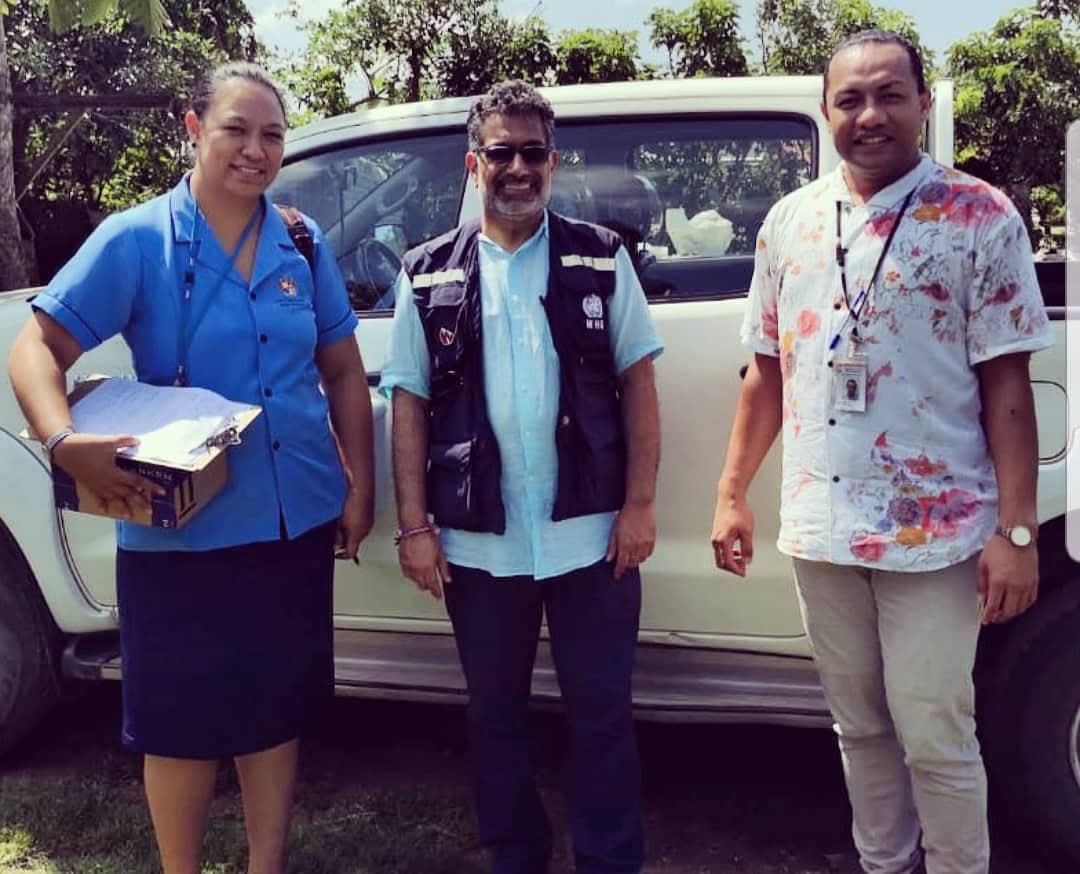 Photo caption: Dr Joseph Takai participates in contact tracing and vaccination efforts during a measles outbreak in Tonga, 2019. Photo credit: Ministry of Health, Tonga
Dr Koh Kai Shing, who heads the Epidemic Intelligence and Response Unit at the Brunei Centre for Disease Control, spent four weeks with the WHO team as the second leader participant, and left with a draft standard operating procedure for the management of signals — a gap Brunei flagged in its 2019 Joint External Evaluation, particularly the ability to pick up signals from beyond its borders.
She shared: “Working at the country level, I rarely get to see how diverse this region really is, how differently a small state and a large one have to be supported, and how much that shapes what help even means from one country to the next. However, the greatest gain was people knowing who to call — and being able to call turns out to be its own kind of preparedness.”
On 15 October 2026, alumni, Member States and partners will mark 20 years of the programme at a community of practice event. They will also help shape regional policy on sustaining a health emergency-ready workforce.
Twenty years on, the programme has done more than train epidemiologists. It has built a community of people who are connected, able to learn from each other and lean on each other during a crisis.
Invest in people, and the whole Region is better prepared.