/59748.tmb-300v.png?sfvrsn=9885965b_2 "For the future - publication thumbnail")

/spotlights/1920px-w_web-welcome-banner.png?sfvrsn=9fab3008_4 "1920px W_web-welcome banner")
Health Promotion and Policy
Supports Member States to prevent noncommunicable diseases and injuries by addressing key risk factors and advancing evidence-based, multisectoral policies, strengthened through strategic advocacy and partnership building.

© WHO/Enric Catala
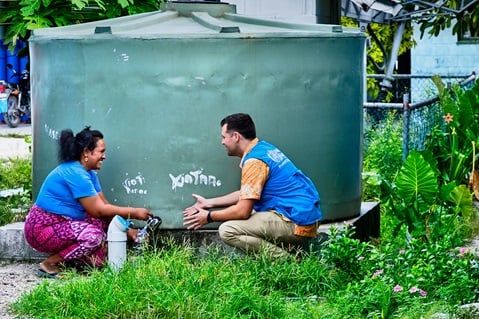
Nurse giving mother health education during regular house visit.
Nurse giving mother health education during regular house visit.
©
Credits
The Health Promotion and Policy (HPP) unit supports Member States in developing and implementing effective policies and interventions to reduce noncommunicable disease (NCD) risk factors and prevent injuries through coordinated, evidence-based, data-driven and whole-of-government and whole-of-society approaches.
This is accomplished by:
- Supporting implementation of WHO “Best Buys” to reduce NCD risk factors, including tobacco use, alcohol consumption, and physical inactivity.
- Assisting Member States to develop and implement multisectoral policies and interventions for injury prevention, guided by WHO global strategies such as those on road safety and drowning prevention.
- Strengthening national capacity in surveillance and use of data and evidence to inform policy action to build health-promoting environments.
- Delivering technical support, policy review, and strategic advocacy to build public and political support for effective policies, laws, and regulations.
- Facilitating multisectoral dialogue and promoting cross‑country exchange of experiences.
Ms
Xi
Yin
Coordinator, Health Promotion and Policy
Her current work focuses on supporting Member States to reduce the burden of noncommunicable diseases and injuries through evidence-based health promotion and prevention policies in the Western Pacific Region
Learn moreContact us
Our work
All →News
All →Feature stories
All →Publications
All →
30 June 2026
Smoke-free laws in action: a guide for effective implementation and enforcement in the Western Pacific...
This guide supports policy-makers, public health officials and enforcement agencies in bridging the critical gap between smoke-free laws and high compliance....
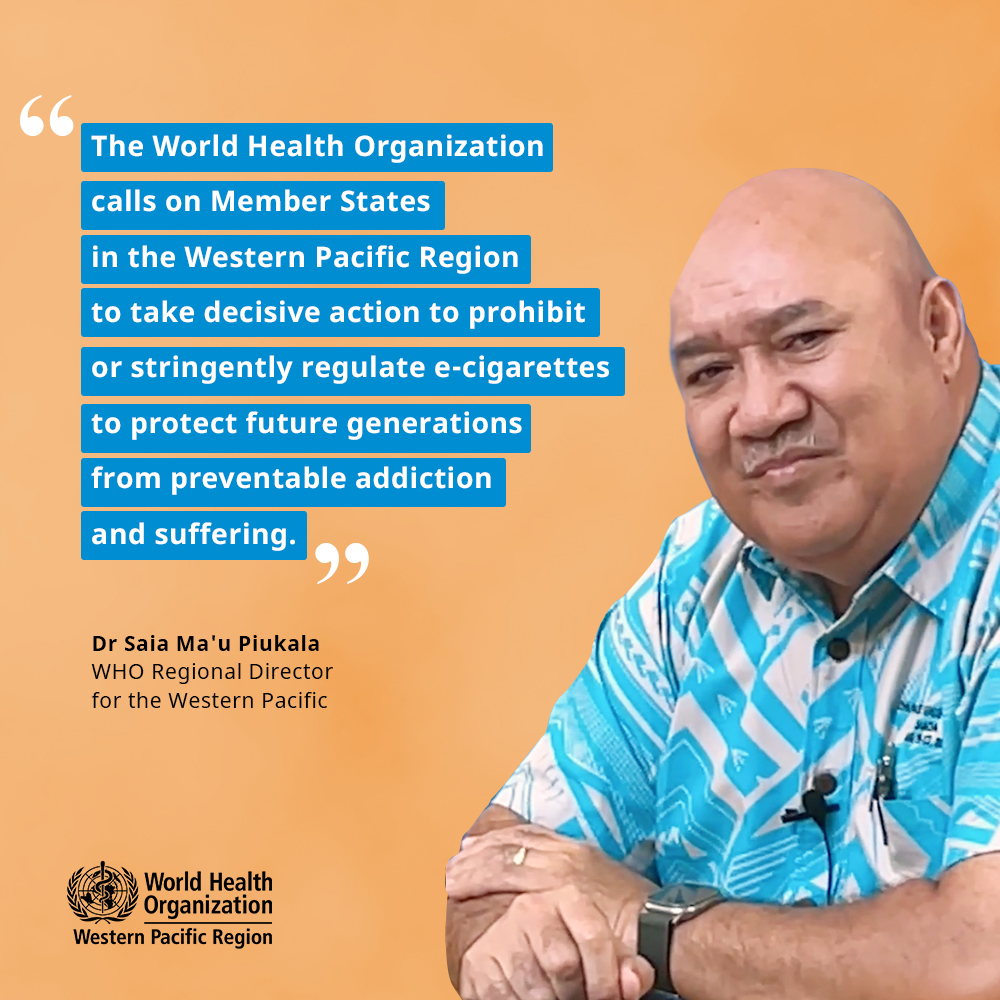
E-cigarettes, the most common type of electronic nicotine delivery systems (ENDS) and electronic non-nicotine delivery systems (ENNDS), heat liquid to...
Over the past 20 years, the WHO Western Pacific Region has made significant progress in tobacco control, guided by the WHO Framework Convention on Tobacco...
22 June 2023
Regional action framework for noncommunicable disease prevention and control in the Western Pacific
The Regional Action Framework for Noncommunicable Disease Prevention and Control provides a unified vision of objectives and recommended actions to combat...